
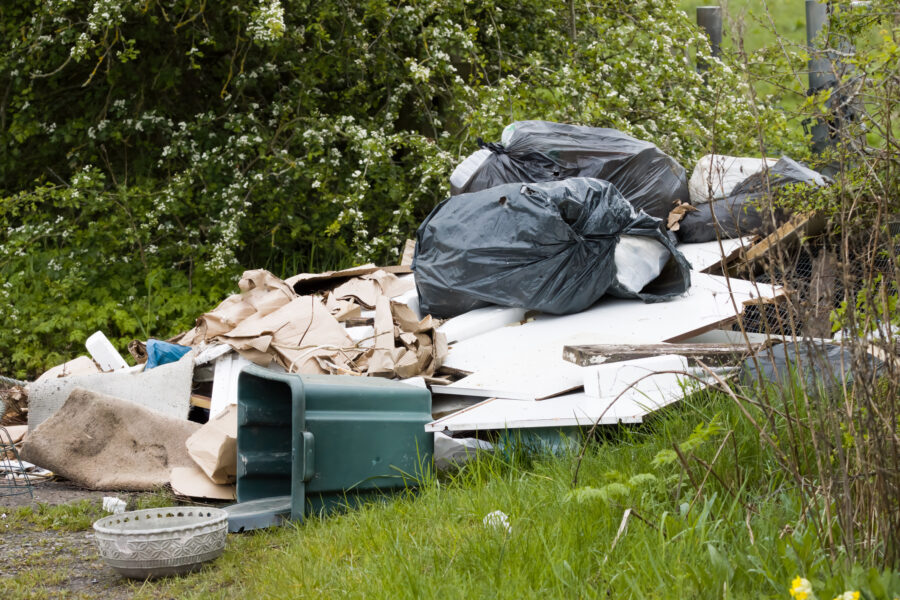
The UK government’s announcement that Environment Agency officers could be granted police-style powers to tackle fly-tipping and illegal waste disposal marks a significant shift in how waste crime is treated in England. Under the proposals, officers may be able to search premises without a warrant, seize assets and arrest suspected offenders, bringing waste crime more squarely into the category of serious and organised crime.
From an enforcement perspective, this is a clear signal of intent. Waste crime causes serious environmental harm, blights communities and costs the economy around £1 billion a year. Yet for decades it has often been treated as a low-risk, high-reward activity. Giving regulators stronger powers may help close that gap.
However, enforcement muscle alone will not be enough. A Centre-UB PhD studentship being conducted by Nachammai Lakshmanan under the supervision of Prof. Bandyopadhyay and Dr Beltran, in collaboration with the Environment Agency, is complementing these new powers with a deeper understanding of the behaviours that drive waste crime in the first place and, crucially, of what actually works to deter it.
Read more of the news story here.
You can find out more about Nachammai’s PhD here.