
PhD Student: Hayley Green; Partners: Katapult and Drayton Manor; Supervisors: Dr. Cathy Manning, Prof. Peter Kraftl and Prof. Sophie Hadfield-Hill; School of Geography, Earth and Environmental Sciences
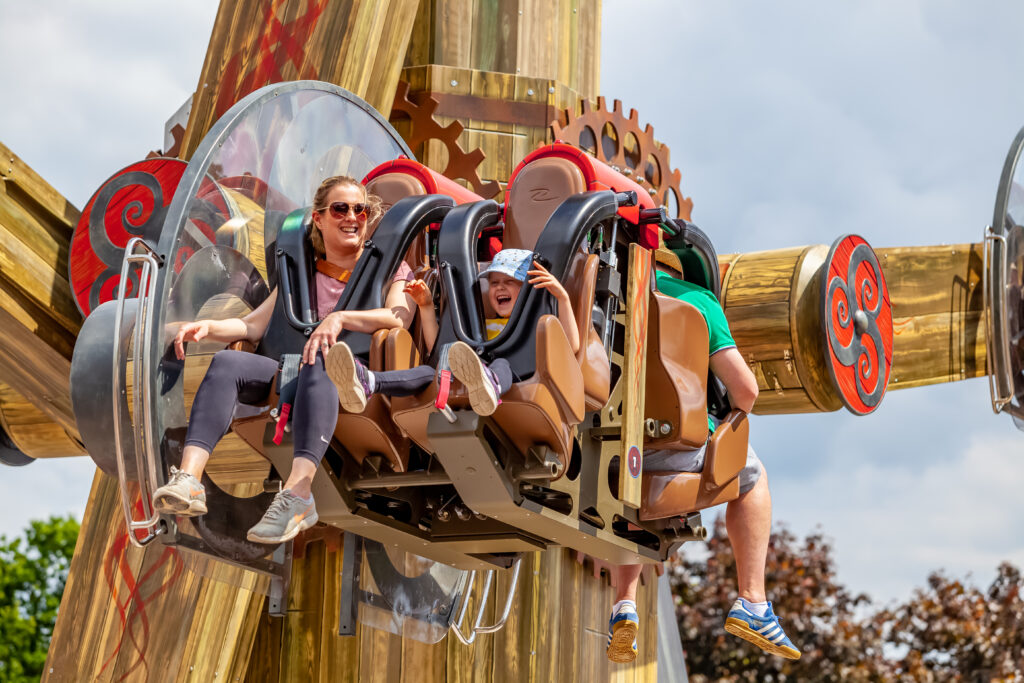
Neurodivergent people are often excluded from public spaces and leisure, due to sensory environments, communication barriers, and misunderstandings. Having a negative impact on quality of life. Public spaces are legally obliged to consider physical accessibility (e.g. wheelchair access), but little consideration is given to 15-20% of the population who are neurodivergent. Some businesses use approaches to become inclusive for neurodivergent people (‘neuroinclusive’), such as supermarkets with quiet hours with dimmed lights and no music. However, this approach might not work for theme parks, where the sensory input (e.g. lights) and unpredictability (e.g. unexpected noises) are likely integral to enjoyment and appeal.
Understanding what makes theme parks neuroinclusive is a unique challenge; asking not only what makes a theme park inclusive for everyone, but also more ‘fun’ for everyone.
This PhD project is conducted by Hayley Green, who is neurodivergent and a theme park enthusiast. The project will utilise academic supervisors’ expertise from psychology and human geography and collaborate with companies that design and provide themed attractions. The project will also design and carry out the study with a lived experience consultation group.
The project aims to address the following potential research questions:
• How do neurodivergent people experience theme parks and how does this affect their behaviour?
• What are the barriers and facilitators for neurodivergent people visiting theme parks?
• What are the barriers and facilitators for theme park operators and designers to implement changes to become more neuroinclusive?
• Can resources produced in the PhD change attitudes and behaviour towards neuroinclusion among theme park professionals?
These questions will be addressed using surveys, guided walks and interviews. The project will culminate in a resource providing recommendations to help themed entertainment attractions become neuroinclusive.