
PhD Student: Andrea Rizzardi Orlandi; Partner: Twycross Zoo; Supervisors: Prof. Sarah Beck and Prof. Peter Kraftl; School: School of Psychology.
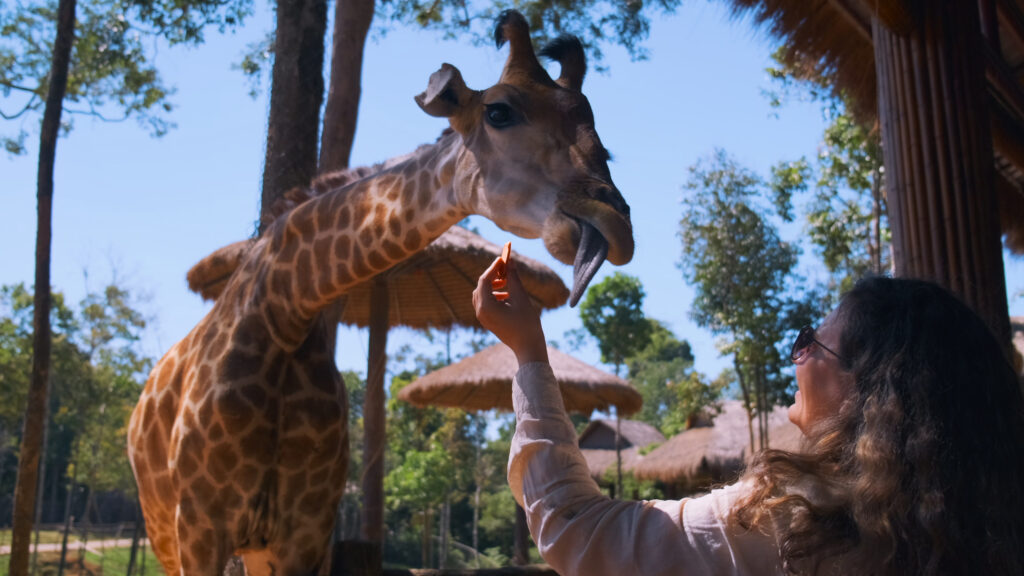
This PhD is an interdisciplinary project aimed at understanding the educational impact of zoos on pro-conservation behaviour change. The project is guided by an expert supervisory team comprising Prof. Sarah Beck (Psychologist, Lead Supervisor), Prof. Peter Kraftl (Human Geography, Co-Supervisor), and Dr. Richard Sands (Head of Conservation Education at Twycross Zoo, Partner Organisation Supervisor). Their diverse backgrounds and expertise highlight the interdisciplinarity of this research project.
In collaboration with Twycross Zoo, we will leverage this expertise to develop innovative mixed methods that investigate how individuals’ expectations of the zoo are shaped by their social backgrounds, specifically, socio-economic status and whether they reside in rural or urban environments. We will also examine how these expectations and backgrounds relate to behaviour at the zoo and their impact on subsequent pro-conservation behaviours.
The project will consist of three main studies:
– Study 1: An online questionnaire targeting British citizens to assess zoo expectations, intentions for pro-conservation behaviour, and their relationships to individual social backgrounds.
– Study 2: An in-person questionnaire for zoo visitors that analyse the relationship between expectations and real-life behaviour at the zoo. This study will also measure intentions for pro-conservation behaviour. Participants will be tracked using GPS technology to observe how they interact with exhibits and the time spent in front of them. A follow-up study after one month will evaluate actual pro-conservation behaviour change and correlate it with previous intention measures.
– Study 3: A qualitative study aimed at exploring quantitative findings in greater depth. Participants will create photographic diaries to narrate their zoo visits, followed by in-depth visual interviews.
Building on my master’s thesis, this project will also investigate how zoo visits influence perceptions of species conservation status. We will explore not only how these visits alter perceptions but also how prior virtual experiences shape them. The research will focus on the “Virtual Population Theory”, which suggests that charismatic species are perceived as less endangered than they are in reality due to their frequent representation in virtual media such as movies, cartoons, social media, and advertisements. This phenomenon creates a subconscious “Virtual population” in public perception, which can distort understanding of actual species abundance in nature.
In partnership with Twycross Zoo, this project will actively explore educational alternatives and develop conservation Talks aimed at enhancing visitor understanding of the IUCN Red List of Threatened Species and the specific conservation statuses of the zoo’s resident species.